Saturday, May 7, 2011

COMING THIS WEEK!

Week of May 8, 2011—An Interview with Lisa Wheeler
Quote for the week:
Over the years I have discovered that ideas come through an intense desire for them; continually desiring, the mind becomes a watchtower on the lookout for incidents that may excite the imagination.
—Charlie Chaplin

Seldom will any of us have the opportunity to sit and learn from, exchange emails with, be critiqued by, have dinner with, or interview an author we admire. But I’m happy to say I’ve had all those opportunities with Lisa Wheeler. This week I want to share an interview with Lisa that will inspire and inform. Get ready to learn from a picture book great!


Monday—Reflections on NaPiBoWriWee and Meet Lisa Wheeler
Tuesday—The Beginning of a Writing Career
Wednesday—Not-so-secret Secrets to Success
Thursday—Tips from Lisa and What She's Up to Now
Friday—Lisa Wheeler Retrospective

Friday, May 6, 2011

Internal Dialogue

Week of May 1—He Said, She Said—Dialogue in Picture Books
Friday, May 6—Internal Dialogue

I’ve enjoyed this week as we’ve delved into dialogue. I’ve learned tons as I’ve searched through the writing of some of my favorite authors. But— TGIF! Aren’t you glad the weekend is almost here? I sure am. Since it’s Friday and you’re probably as exhausted as me, this post will be short, sweet, and to the point.

Today let’s look at internal dialogue. By internal dialogue I mean the thoughts and feelings of characters. Take this line from one of my manuscripts:

What do those old women know about pirates? Bartholomew thought.

Internal dialogue is a conscious thought of a character and often deals with emotions or feelings. But internal dialogue is really not dialogue—there’s no conversation going on. For that reason, the normal rules for dialogue are not followed. No quotation marks needed here, instead use italics for the character’s thoughts. (I will admit occasionally you see internal dialogue punctuated in different ways, but ital seems to be preferred by most authors and editors.) Now if I had written the line above and added Bartholomew said to himself, I would fall back on the normal dialogue punctuation.

“What do those old women know about pirates?” Bartholomew said to himself.

The distinction between the two examples above is a fine line. So be aware that there may be a difference in opinions out there in the real world of picture books.

Since I’ve spent a lot of time this week admiring Tammi Sauer’s writing, let’s end the week with another of her books. I believe Cowboy Camp was Tammi’s first picture book and she uses internal dialogue throughout the story to show the conflicted feelings of her main character, Avery. Here are two examples . . .


   Everyone dug in. It wasn’t but a minute later that Avery discovered he couldn’t stomach a single bite of cowboy food. He had to eat cheese and crackers instead. Whoever heard of a cowboy who didn’t like grits and beans? he thought.

   Everyone started twistin’ and twirlin’ their lassos. It wasn’t a minute later that Avery discovered he had a bad case of rope burns. He had to practice with yarn instead. Whoever heard of a cowboy who got rope burns? he thought.

From: Cowboy Camp by Tammi Sauer and Mike Reed

In honor of all of the cowboys out there, I won’t beat a dead horse! You get the idea. Internal dialogue reveals the thoughts and feelings of a character and is usually punctuated by putting the thought in italics.

It’s Your Turn!
1. Look back at the manuscript you are currently revising. Are you using internal dialogue? Would it/could it be helpful to do so? If you are using internal dialogue, have you punctuated it correctly?

Thursday, May 5, 2011

Dialogue and Action

Week of May 1—He Said, She Said—Dialogue in Picture Books
Thursday, May 5—Dialogue and Action

For the most part, my method of writing instruction avoids rules. After all, writers who are all bound up with rules aren’t free to write. But every once in a while, I break my rule about no rules. Below is a poster showing one of my rules.


If you haven’t read a fourth grader’s writing lately (or listened to a fourth grader conversation), this is what it’s often like:

He said that I said that she said that I said he said it. Then she said if I said it how could he have said that she said it? And I said that’s what I’ve been saying. Do you feel me?

Some picture book writers fall into the same trap as fourth graders—they rely too heavily on dialogue to tell their story. Now you know my philosophy, “If you’ve caught it, you’ve got it,” so I guess it should go without saying that I struggle with ubber-dialogue syndrome, too. The editor who eventually purchased my book, Cowboy Christmas, said something like this about my original manuscript: “Page after page of cowboys sitting around a fire talking doesn’t sound very exciting. What do you suppose the illustrator would illustrate?” (I’m sure she said it quite nicely, but I remember it being about that blunt.)

A story has action with a sprinkling of dialogue. Granted, dialogue is often essential to understanding a character, it’s that character’s actions that bring the character to life.
As an example of the skillful combination of dialogue and action, let’s return to the popular Chicken Dance by Tammi Sauer and Dan Santet. When we last left Lola and Marge, they were heading to the talent show.


The chickens bumbled to the barn, found their seats, and settled in for the show.

The goats ate a tractor and scored a seven.
“Not bad,” said Marge.

The pigs formed a pyramid and scored an eight.
“I’ve seen better,” said Lola.

The cows jumped over the moon.
“That’s old!” said Lola. “We can still win this thing!”

Suddenly trumpets sounded.
The crowd gasped.
The ducks grabbed their boards and hit the water.

They scored . . .
. . . a nine.
The barnyard went wild.

Smirking at the chickens, the ducks flounced back to their seats.
“We’re on,” said Marge.
“We’re doomed,” said Lola.
The chickens shuffled onstage.
They blinked at the crowd.
And gulped.

From: Chicken Dance by Tammi Sauer and Dan Santat

Isn't that delightful? Just enough dialogue to keep us updated on how the characters are feeling, and then on with more action. This is also a perfect example of pacing in a picture book. No long descriptions, but quick, clippy writing. Take a peak at Tammi’s Mostly Monsterly for another example:

When it came time to go to school with other monsters, Bernadette felt a teensy bit nervous . . .

In Monster Moves Class, everyone practiced lurching techniques.
Except Bernadette.

“Group hug everybody!”
That didn’t go over so well.

During Creepy Noises Class, everyone work on growling skills.
Except Bernadette.

“Love me tender, love me true, I’m a Monster who loves you . . .”
Someone ate her microphone.

From: Mostly Monsterly by Tammi Sauer and Scott Magoon

Ok, I could do this all night, so I better stop while I can. But I think you get my point. Use dialogue like sprinkles on a cupcake—sprinkle on that dialogue, don’t douse the cupcake with it!

It’s Your Turn!
1. How about examining the dialogue and action in some of your picture book favorites? Type up the entire manuscript and note when and how dialogue is used and how it supports and is integrated into the action.

Wednesday, May 4, 2011

Dialogue vs. Voice

Week of May 1—He Said, She Said—Dialogue in Picture Books
Wednesday, May 4—Dialogue vs. Voice

I’m about to wade into some murky water. Since I live in Florida, I know the dangers of murky water . . .


. . . despite the danger, I’m wading in!

When I’m with other writers (and writing teachers), there’s often a lot of confusion about the difference between voice and dialogue. When we throw character development into the conversation, the confusion grows and grows and grows. Let me make two statements to begin to clear up the issue.

Voice belongs to the writer.

Dialogue belongs to the characters.

You could hand me two books—one by Margie Palatini and one by Lisa Wheeler—and I could tell them apart just by the author’s voice. Palatini’s humor, word play, and puns are distinctively her. Wheeler’s pacing, word choice, and rhyming patterns are her signature. Voice is the author’s personality, his/her heart. We need to spend time talking about voice, but we’ll save that for another day (or days).

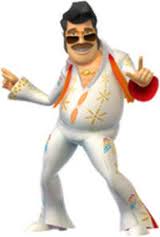
Now if you were to read only the dialogue from books to me, it would be more difficult for me to distinguish the author. That’s because character dialogue fluctuates to match the personality of the character and two authors might have similar characters in their books with similar dialogue. Yesterday we looked at Tammi Sauer’s Elvis Poultry character from Chicken Dance. Chances are, almost any author is going to write a similar character’s dialogue in a similar way—


“Ah-one for the money. Ah-two for the show. Ah-three to get ready . . . Thank you. Thank you very much.”

While voice shows the author’s personality, dialogue shows a character’s personality. Each character’s personality needs to be as distinctive as a fingerprint, so the dialogue of that character must be distinctive. Take a look at some of these Lisa Wheeler characters to see what I mean . . .


Annie Halfpint hollered,
“Now halt! You mean ol’ cuss!
Back to the top! Hey! I said STOP!
You makin’ fun of us?”

From: Avalanche Annie by Leslie Wheeler and Kurt Cyrus


Mary, Mary quite contrary,
she’s a walking dictionary.
“I think you mean encyclopedia.”

Mary’s such a know-it-all
even though she’s three feet tall.
“I’m actually three-feet-two!”

Always interrupting folks
with her comments and her jokes.
“Why didn’t the chicken cross the road?”

Correcting people when they speak.
Injecting humor, old and weak.
“Because she was chicken. Get it? Chicken!”

From: “The Interrupter,” Spinster Goose: Twisted Rhymes for Naughty Children by Lisa Wheeler and Sophie Blackall

Can you pick up the differences in characters through the dialogue? Even small changes in the text of dialogue can show differences in characters. Take a look at another example from Lisa (and also note the role of the dialogue tags in character development).


Farmer Dale’s red pickup truck
slowly rattled on.
A goat with an accordion
stood grazing on the lawn.
“Can I squeeze in?” asked Nanny Goat.
“My pleasure,” Farmer said.
“Ba-a-a-d idea,” said Woolly Sheep.
“The engine’s almost dead.”
“No room!” lamented Roly Pig.
“We’re overcrowded now!”
“We’ll make some room,” said Farmer Dale.
“Mooove over!” bossed the cow.

From: Farmer Dale’s Red Pickup Truck by Lisa Wheeler and Ivan Bates

Dialogue allows us to give voice to our characters, to show their personalities, and to give them life. Did I make the murky water more muddy? Or is that crystal clear?

It’s Your Turn!
1. How is the dialogue of your characters showing their personalities? Can a reader distinguish between your characters through the dialogue of the characters? This would be a good time to stop and polish up that dialogue!

Tuesday, May 3, 2011

Dialogue Tags

Week of May 1—He Said, She Said—Dialogue in Picture Books
Tuesday, May 3—Dialogue Tags

I’ve written about dialogue tags before. Dialogue tags are one of the things I love to play with when I’m writing. I’ve heard in some workshops to always stick with said, responded, asked—the basic dialogue tags. I’m beginning to think that suggestion might be truer in novels than in picture books. Why? Because our word count is so limited and our need to communicate emotions, character development, and action are so important.

My editor from Golden Books-Random House recently gave me the challenge of cowboy-ing up a manuscript. (Yes, the book is about cowboys!) One of the first things I worked on was dialogue tags. Think of all the words that might describe how a cowboy says something: hollered, yodelled, yehawed, yelped, goaded, and on and on and on. My editor (and the publisher) loved the cowboy-ing up I did.

I also exchanged several emails with my editor about the placement of tags—should I use said Mack or Mack said? I most often put the tag after the name, my editor most often places tags before names. We found a mixture of the two seemed to work well in my book.


In her book, Comes a Wind, Linda Arms White uses a variety of dialogue tags for the two brother characters who are always arguing. On the other hand, the calm mother in the book uses (for the most part) more “normal” verbs such as said. The dialogue tags used for the brothers are:

mumbledsaidaddedgrumbledsnappedcalledmutteredbarkedaskedgruntedboomedbeganshoutedcried

Notice how the dialogue tags help us to see the escalating tension between brothers and a bit of their personalities.


 In The Recess Queen by Alexis O’Neill and Laura Huliska-Beith, O’Neill’s central character, Mean Jean, has two tags associated with her dialogue—growled and howled. The fact that the tags are repeated makes Mean Jean appear even more menacing. When the character of Katie Sue is introduced, different dialogue tags are used—said, sang, and sang out. O’Neil uses dialogue tags to differentiate between the two central characters. Another unnamed character gets one line of dialogue and one “regular” dialogue tag—called out.


Now, let’s look at a completely different example. Chicken Dance, the hilarious product of Tammi Sauer and Dan Santat, uses dialogue tags sparsely. When she does use a dialogue tag, Sauer’s usually chooses said. She also uses yelled, whispered, called, and crooned. (Crooned, by the way, is the choice for Elvis Poultry’s dialogue. How hilarious is that?!) What is most interesting to me about this book is that Sauer often doesn’t use dialogue tags at all. Instead, she opts to identify the character speaking in other ways. Here’s an example:

Marge and Lola waded ashore and spit water from their beaks.
“Any other big ideas?” said Lola.
Marge stared at the setting sun. “Too late. It’s show time. We’ll have to wing it.”
The chickens bumbled off to the barn, found their seats, and settled in for the show.

We know Marge is speaking so a dialogue tag is not needed. Take a look at another example:

The ducks paraded by.
“Don’t bother, drumsticks.”
“Ducks in every year.”
“All a chicken can do is bawk, flap, and shake.”
Marge and Lola ignored the quackers and tested out their talents.

There is no need to write said the duck, quacked the second duck, or another duck laughed. The idea is clear and the word count is reduced!

The moral of the story is, don’t shy away from dialogue tags. But make sure they are working for you and not working your nerves. Each word in your manuscript has to be chosen carefully. If an “unusual” dialogue tag adds to the story, use it. If not, opt for said or restructure the sentence so a dialogue tag is not needed.

It’s Your Turn!
1. Go on a dialogue-tag hunt. Pull out some of your favorite picture books and make a list of the dialogue tags you discover. Make note of how authors structure their sentences and the placement of their dialogue tags.

Monday, May 2, 2011

Dialogue Rules

Week of May 1—He Said, She Said—Dialogue in Picture Books
Monday, May 2—Dialogue Rules

I spend a lot of time talking about breaking the picture book rules and I often question if the rules we’re breaking are actually rules to begin with. But when it comes to punctuation, breaking the rules is not considered being creative. At best, it’s considered being uninformed. The editor and teacher in me wants to make certain no one stays uniformed!

I have a couple of dialogue posters up for my students. Mind you, my students are fourth graders.


My dialogue rules poster is a good, basic beginning point. If you’ll do this much, you’ll be good to go. But let me delve a little deeper into dialogue rules so the bases are covered.

1.   Indent for each new speaker.
(New speaker = New paragraph)
“What time is it?” asked Frank.
“Time to go,” Mavis answered.
2.   Only put the words of the speaker inside the quotation marks.
3.   Quotation marks always come in pairs.
4.   Punctuation always goes inside the quotation marks.
5.   Words used to identify the speaker are called tag lines or dialogue tabs.
6.   There are four ways to write tag/dialogue tags.
Before the quote:
Mary screamed, “Help me, please!”
Note: The comma always follows the tag line.
After the quote:
“What do you think we should do?” Arthur asked.
“That’s a good question,” said Mary Lou.
Note: If the sentence would normally end with a period, use a comma inside the punctuation marks. If the sentence is a question, use the question mark inside the punctuation marks.
In the middle between two sentences:
“We’ll leave soon,” Mother said. “Be ready to go.”
Note: A period follows the tag line and the beginning of the second sentence/quote is captialized.
In the middle when the tag line splits the quote into two parts:
“We hurried to the cafeteria,” Minnie began, “but we were too late.”
Note: A comma follows the first part of the quote inside the quotation marks, a comma follows the tag line, new quotation marks open, and the sentence continues with a lower case letter.
7.   Once the speakers have been identified, tags lines are not always needed.
“You are afraid of everything,” said Tom.
“Not everything,” I answered.
“Yes, everything.”
“Ok, you’re right,” I finally agreed.
Note: This rule helps to break up the redundancy of he said/she said. But be careful. Be certain the reader can understand who is speaking.

Now, that you know the rules, I will admit that some authors break them. In her book, Sweet Tooth, Margie Palatini puts the dialogue of the tooth in boldface print without a tag line.

   “It’s over for you tooth,” announced Stewart defiantly, lifting the carrot above his head.
   “What are you going to do with that?” asked his wide-eyed sister. Stewart grinned. He opened his mouth wide. Very wide.
   “Kid! No! Not the carrot! Not the carrot!”
   “Yes. The carrot!” shouted Stewart.
   “No, Kid, no!”
   Allison covered her eyes.
   Closer. Closer. Closer. And then—CR-CR-CRUNCH.

In Saturdays and Teacakes, Lester L. Laminack puts all of the dialogue of his Grandmother (Mammaw) in italics. Some of my writing nerd friends speculate Laminack did this to show this is a memory. But we all have seen many memoirs and stories in past tense that didn’t follow this format. This was just Laminack’s (and his editor’s) preference. Here’s an excerpt:
  
   Then before long Mammaw said, We best clear these dishes away and get at that yard before it gets too hot.
   I followed her out to the back porch. Let me put a little water on these ferns, she said. You got on ahead to the car house. (That’s what Mammaw called the garage.) I’ll be out directly.

It’s Your Turn!
1. Choose one of your favorite picture books and type out the text. As you do so, pay attention to the use of dialogue and the dialogue rules used.


Sunday, May 1, 2011

COMING THIS WEEK!

WEEK OF MAY 1—HE SAID, SHE SAID—DIALOGUE IN PICTURE BOOKS
Quote for the week:
“What is the use of a book,” thought Alice, “without pictures or conversation?”
Alice's Adventures in Wonderland

Saying the just-right words at the just-right time can mean the difference between love and loneliness, war and peace, and rare and charred steak. Using dialogue correctly in picture books can add life to characters, humor to situations, and emotion to stories. Using dialogue incorrectly, poorly, or without purpose can. . . well, let’s not even go there!

Monday—Dialogue Rules
Tuesday—Dialogue Tags
Wednesday—Dialogue vs. Voice
Thursday—Dialogue and Action
Friday—Internal Dialogue

Wednesday, April 27, 2011

7 Books in 7 Days!


National Picture Book Writing Week
May 1-7, 2011


7 Books in 7 Days!

Paula Yoo is once again sponsoring/hosting/corralling National Picture Book Writing Week.


Visit Paula’s blog/web site at http://paulayoo.com/ for more information and to join the fun. Note: Paula’s web site is being redesigned. The old site (that is up as of this moment) seems slow and awkward to me. So be patient

Sunday, April 24, 2011

Coming This Spring


Interviews with:
·    Lisa Wheeler
·    Deborah Wiles
·    Tammi Sauer
·    Linda Arms White

Guests blogs from:
·    Joyce Sweeney
·    Jamie Morris

We’re going to be showered with information that will make our writing grow and flower.

Saturday, April 23, 2011

Friday, April 22, 2011

Putting Critiques into Action

Week of April 17: The Power of Critiques
Friday, April 22—Putting Critiques into Action

I think I’ve written about the writer I met last year in the cab from the SCBWI/LA conference to the airport. She’s the woman who has been working on the same picture book manuscript for ten years. “My critique group has been helping me a lot,” she said. Then there’s the woman I met in a critique setting who began by saying, “I know you all told me to make changes in this. But I brought it back the way it was, just to see if you’d changed your mind.”

Makes you laugh, doesn’t it? It’s sad though how so often writers (that includes you and me) won’t listen to what they hear in critiques. I’ve been guilty of it.
I paid for an expensive critique and was told exactly what I was told in a totally free critique group! A real waste of time and money.

Everyone listens and hears differently. Here are some things that stand out to me when I’m hearing critiques. These are the first things I know I need to pay attention to:

1.  I hear several people saying the same thing;
2.  Someone addresses something I know is a problem, but didn’t know how to fix;
3.  When someone says something so true (or wonderful or creative), that I can’t believe I didn’t think of it earlier;
4.  When the group reads my manuscript aloud and I hear a voice other than my own reading it, stumbling over it, and trying to figure it out;
5.  Someone points out a silly mistake I should have caught on my own;
6.  Someone suggests something that makes me uncomfortable. (That is almost always a sign that I need to listen to what I’m being told.)

In her helpful article “The Give and Take of Critique” (© 2007, SCBWI, For use by SCBWI Members ONLY), Linda Sue Park describes the process she follows after receiving critiques.

First, I sort the comments. I suppose this could be done in your head, but I actually make a list. Three columns at the top of a page. Yes / Maybe / No No No! I put brief notes under each heading based on the comments I received. Then I start revising. I start with the Yes column—the comments I love. You know what I mean—when someone says something and you think, “Eureka! That’s perfect—why didn’t I think of that! Thankyouthankyouthankyou!” I make those changes first.

Then I stop and think. A lot. This phase takes the longest. I think about the other two columns—especially about the items under No No No! If enough time goes by, my wounded feelings about these negative comments subside and I’m able to be much more objective about them—rather than dismissing them emotionally.

Ok, can I confess a crazy thing I do? I take a clean copy of my own manuscript with me to critique group meetings. As the manuscript is read aloud (or as people talk about it), I make my own critique notes. I try to have an out-of-body experience, to not be the author of the piece for just a few minutes. I’ve made some important discoveries doing that. Despite how crazy it sounds, it might work for you, too.

It’s Your Turn!
1. Find those notes from your last critique. Pour over them. Maybe you want to make a Linda-Sue-Park list. Maybe you want to try an out-of-body experience and critique your own work. Maybe you can face those suggestions that were too difficult to face before. Go on, get to it!